Theatre has no memory, which makes it the most existential of the arts.
— Sarah Kaner
This play is based on the Palestinian song Ya Tal3een, which originally consists of two Tarweedeh songs. These songs carried coded messages: women would sing them by adding an extra “laam” sound to each word, allowing them to secretly pass on instructions to their imprisoned husbands about escape, hope, and survival. A powerful form of resistance.
Drawing on this history, the play portrays the situation in Palestine as an open-air prison, where love, loss, and resistance intertwine in a ritualistic, musical scenography.
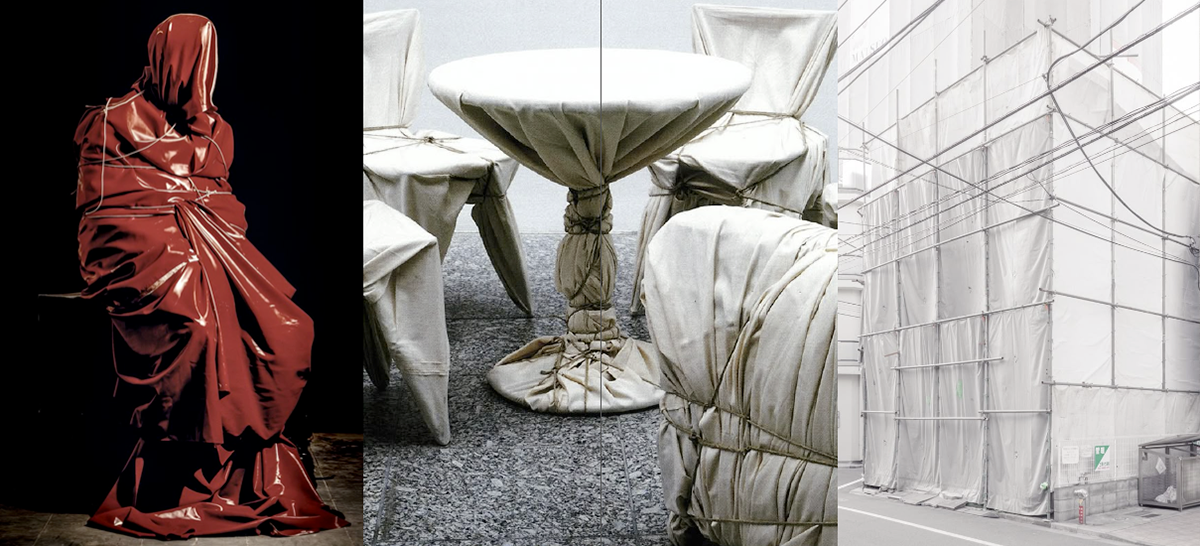
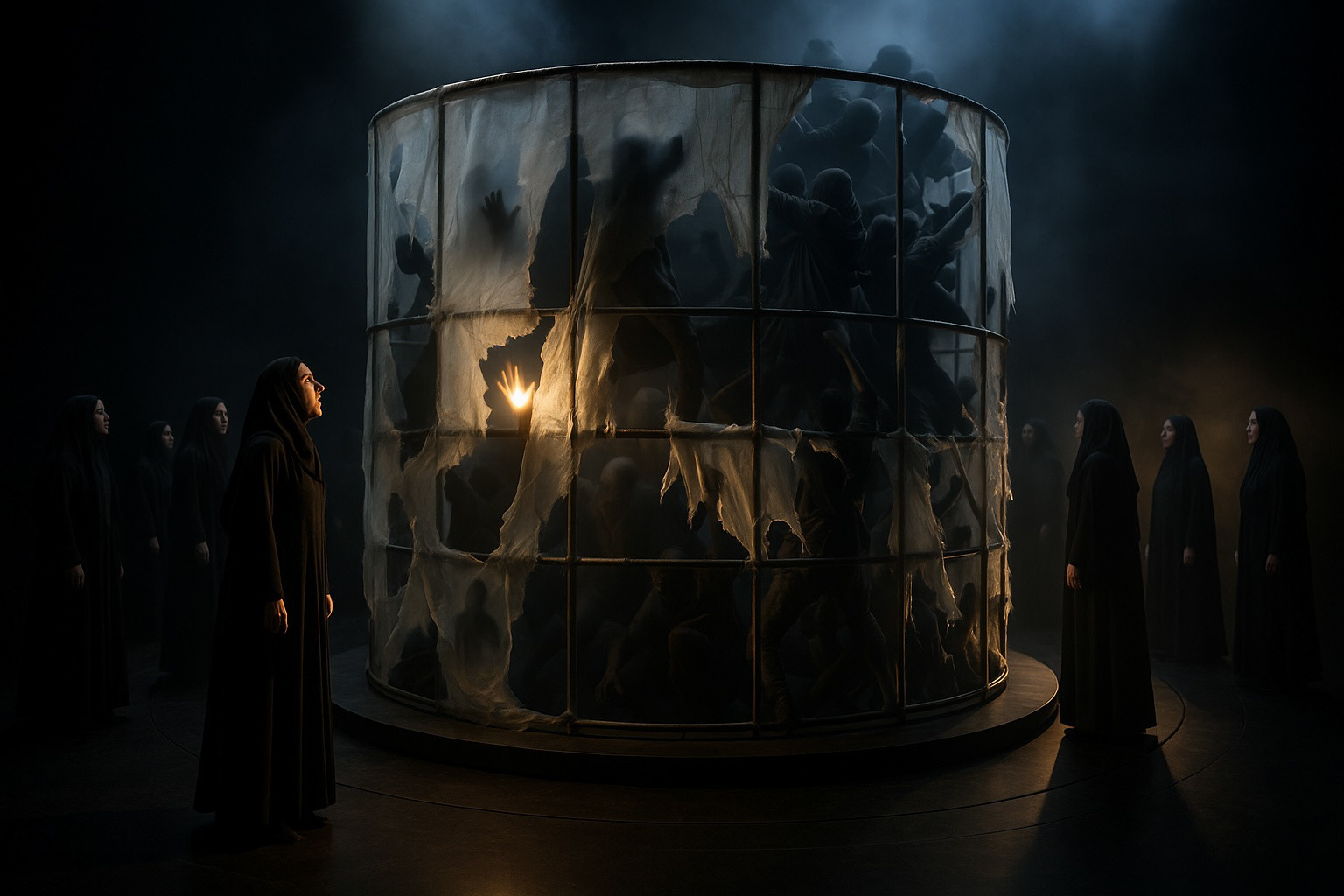
At the centre stands a circular structure made of steel pipes, covered in thick, translucent fabric. Inside this prison: bodies, voices, shadows. The men who are imprisoned.
Surrounding the structure are women covered completely in black, singing Ya Tal3een. It begins with one woman searching for her beloved. She sings. Suddenly, a hand appears against the fabric, and from that opening, light breaks through. More and more women join their voices with hers; more hands become visible.
During the emotional high point in the play, within the prison we will hear the sounds of bombings and gunfire, audible through sound, visible through bursts of light and flashes. The prison itself remains still, but a circular platform surrounding it begins to turn slowly. The women, still singing, are gradually pulled further and further away from their loved ones by this motion.
The men inside continue to try and escape. They climb, push, tear at the material. Light begins to burst through more and more places. Some manage to escape. But many remain entangled in the structure: motionless, lifeless. The play stops when the ghost of the death sing softly with the living.